Sport · Athlete mental health · Implementation science
Research, built for the .
We help sport organizations, nonprofits, and funders turn research into training, tools, and practices designed for how sport works, then prove they make a difference. Your organization owns everything we create together: the materials, the data, and the intellectual property.
What it takes
Improving athlete mental health and well-being takes work that's grounded in evidence and designed for sport.
The research on sport and young people's health is strong. What reaches practice, the sideline, and the athletic training room usually falls short on at least one of these.
Informed by evidence
Grounded in what research shows changes behavior. Knowledge alone does not. The norms on a team and the policies, procedures, and expectations of a club, athletic department, or school shape behavior far more than any training, so the work has to reach those too.
Realistic in sport settings
Built for the season, the schedule, and the culture of a team. Much of what's offered was designed for classrooms or clinics and dropped into sport.
Easy to use
Coaches, athletic trainers, administrators, parents, and athletes all have full plates. If something costs time, it doesn't get prioritized, however good it is.
Something people want to use
The best tools save people time, make them better at the thing they love, or make them look good. When people want it, they keep using it.
Proven to work
Most sport initiatives are never studied. Without evidence of what they change, they're hard to improve, hard to defend, and hard to fund.
What we do
Overlap is your partner from research to funding.
Research to practice
We find what the evidence supports for your goal and translate it into something people can do in a real session, practice, or check-in.
You getEvidence briefs, design principles, and plain-language summaries for staff and boards.
Theory of change
We name the specific behaviors you're trying to change, who has to change them, and how you'll know. Everything else gets built from this.
You getA theory of change, a logic model, and discovery interviews with the people involved.
Design built for sport
We design training, tools, and messaging around how people in sport behave, using implementation science so the work fits the season, the schedule, and the culture.
You getCurriculum, playbooks, handbooks, season messaging, video briefs, and delivery tools.
Evaluation and measurement
From process evaluation for a first pilot to research-grade, multi-site studies with independent review and publication.
You getMeasurement plans, instrument selection, data collection, analysis, and reports funders trust.
Grants and funding strategy
We help you make the case to foundations, sponsors, health systems, and federal, state, and local funders, and we write the proposals.
You getGrant proposals, funder positioning, board decks, and one-page overviews.
Speaking and advising
Keynotes, workshops, and standing scientific advisor roles for organizations that want a researcher and practitioner in the room.
You getConference and staff talks, advisory appointments, and partner positioning.
How an engagement runs
Three phases. Start where you are.
Each phase is its own engagement. You can begin at any phase, stop after any phase, and own everything we built. Most partners continue because each phase builds on the last.
Foundation
Get clear on the change before building anything.
- Discovery interviews with leaders, coaches, parents, and athletes
- Theory of change
- Measurement plan
Build
Design around the people who will use it.
- Curriculum and playbooks
- Low-burden tools and messaging
- Positioning for partners and funders
Pilot and evaluate
Test it in real sport settings and show what it does.
- Pilot sites and implementation support
- Evaluation, from process to research-grade
- Reports and publication
Built to be funded
We set you up to compete for funding. A clear theory of change, a measurement plan, and pilot data are what make a proposal competitive, and we write the proposals with you.
Featured work
PlayMindful, with PlaySafe USA
PlaySafe USA, a nonprofit working in athletic training services and opioid prevention, wanted a behavioral health program that would get athletes to ask for help sooner.
We designed PlayMindful, a two-track program for high school and collegiate athletes. The adult track prepares coaches, parents, athletic trainers, and staff to reach out first. The athlete track helps athletes see asking for help as part of who they are as athletes. The two tracks are built together, so a prepared adult meets a ready athlete.
“Open the door, and keep it open.”
The program targets the factors closest to help-seeking: self-stigma, attitudes toward getting help, and what athletes believe their teammates think. It sits upstream of crisis training and works alongside clinical care. It is non-diagnostic, never fear-based, and light on the adults who deliver it. The check-in is the intervention.
- Foundation
- Theory of change, discovery interview guides for athletic directors, coaches, and parents, and a measurement plan for both tracks.
- Build
- Curriculum for both tracks, participant handbook, adult playbook, season messages for athletic directors, and briefs for lived-experience videos.
- Funding
- Board presentation, program one-pager, internal advocate brief, and a positioning deck for national partners.
- Next
- A six-site, research-grade pilot and evaluation with independent review and publication, now proposed.
PlayMindful · Built from the ground up · Continuing into pilot research
Stephen grounded every piece of PlayMindful in research, so it’s a program I can put in front of schools, partners, and funders and stand behind.
Before we started working with Overlap, we knew we needed a program we could deliver to athletic trainers, coaches, and parents as well as athletes, and it had to be something we could scale and fund. PlayMindful is built to be exactly that. It has given PlaySafe USA a real differentiator in the nonprofit world, and Stephen and Holly built it with us from the ground up. We can now help schools build an “ecosystem of wellness,” where everyone around an athlete, including the athlete, is on the same page about how to give and receive help.
Stephen grounded every piece of it in research, so it’s a program I can put in front of schools, partners, and funders and stand behind. They also assisted with preparation for a speaking engagement to ensure our team was prepared to present on all subject matter.
Through all of it, I’ve never had to wonder about the quality or the timeline. Stephen and Holly do exactly what they say they’ll do, promptly and without my having to follow up. That’s why we plan to keep working with them as we move into pilot research on PlayMindful. Any nonprofit leader who wants work they can build on, without having to manage the people doing it, should talk to them.

 Brandy SingletonCEO, PlaySafe USA
Recurring six-figure state contract · 6,000+ students served in year one
Working with Dr. Stephen Hebard has been a gift to Hilinski's Hope. He led the design of our Game Plan mental health modules while at Prevention Strategies and helped us secure a recurring state contract. In year one, the program reached more than 6,000 students.
 Mark HilinskiCo-Founder, Hilinski's Hope Foundation
From idea to evidence-informed movement · Positioned for grants and partnerships
Holly and Stephen Hebard are a dream team. Stephen brings youth mental health expertise and Holly has wonderful vision for what is important to our organization. They listen deeply, set bold goals, and deliver. Their guidance moved 500 Fist Bumps from an idea to an evidence-informed movement generating grant funding and charitable donations.
 Dr. Mike PerkoCo-Founder, 500 Fist Bumps
Track record
Selected publications
- Hebard, S., Weaver, G., Kearns Davoren, A., et al. (2026). Intentionality in program improvement: How the InSideOut Initiative revised its conceptual model to inform program development and evaluation. Journal for the Study of Sports and Athletes in Education.
- Hebard, S., Seo, Y., Milroy, J. J., & Reifsteck, E. J. (2026). Development and validation of a measure of overconformity to the sport ethic. Journal of Clinical Sport Psychology.
- Milroy, J. J., Kearns Davoren, A., Hebard, S., et al. (2024). National initiative pivots amid a global pandemic: Lessons learned from the InSideOut Initiative. Health Promotion Practice.
- Hebard, S., Kearns Davoren, A., Milroy, J. J., et al. (2021). Reclaiming the educational purpose of sport: The InSideOut Initiative (ISO) logic model. Journal for the Study of Sports and Athletes in Education.
- Hebard, S., Oakes, L., Kearns Davoren, A., et al. (2021). Transformational coaching and leadership: Athletic administrators' novel application of social and emotional competencies in high school sports. Journal of Research in Innovative Teaching & Learning.
- Hebard, S., Bissett, J., Kroshus, E., et al. (2021). A content analysis of mental health literacy education for sport coaches. Journal of Clinical Sport Psychology.
- Bissett, J., Kroshus, E., & Hebard, S. (2020). Determining the role of sport coaches in promoting athlete mental health: A narrative review and Delphi approach. BMJ Open Sport & Exercise Medicine.
- Milroy, J. J., Hebard, S., Kroshus, E., & Wyrick, D. L. (2018). Sport-related concussion reporting and coach-athlete attachment among collegiate student-athletes. Journal of Clinical Sport Psychology.
What we believe
The working rules behind everything we build.
Change the environment, not only the person.
Behavior follows what's normal on a team and what a club or school expects. We work on norms and systems as well as individual skills.
Design for use, not compliance.
Completion rates and sign-in sheets don't change anything. We design for what people will choose to do when no one is checking.
Work through the whole environment.
Athletes, coaches, parents, athletic trainers, and leaders all shape a young person's experience. We find where your organization has the most influence.
The habits that build talent also build health.
High expectations with high support. Well-being and performance are the same work done well.
Measure what matters.
Behavior, not attendance or completion rates. We build measurement in from the start so the work can prove itself.
You own what we build.
The materials, the data, and the intellectual property belong to your organization. We hand everything over in a form your team can run without us.
Who we work with
Organizations that use sport to do good for young people.
Writing
Lab Notes
The first notes are on the way. Subscribe and they'll come straight to your inbox.
About
A researcher who coaches, and an operator who makes change stick.
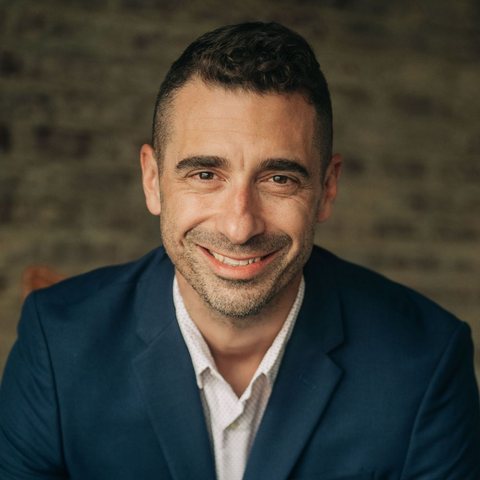
Stephen Hebard, PhD
Principal · Design and evaluation
Stephen has spent his career on one question: how the adults and environments around young athletes shape their health and development. He brings research, clinical training, and time on the training ground to the same table.
- PhD in clinical mental health counseling; dissertation on coach-athlete attachment and athlete well-being
- Implementation science researcher; principal investigator on two NIH grants
- Lead evaluator, NFL Foundation InSideOut Initiative
- Designed PlaySafe USA's PlayMindful; led design of Hilinski's Hope Foundation's Game Plan mental health modules
- Expert trainer in motivational interviewing
- Youth soccer coach at NC Fusion; co-founder of 500 Fist Bumps and The Hebs Group

Holly Hebard, MS
Partner · Strategy and operations
Holly leads the business side of every engagement: strategy, operations, communications, and the organizational change work that decides whether something new takes hold.
- Organizational change management (Prosci)
- Engagement lead on the PlaySafe USA partnership
- Co-founder of The Hebs Group
Start a conversation
Let's get you closer to your goal.
A short note is enough. We'll reply within two business days and set up a call to see whether we're the right fit.
Or email